
Medieval Book of Hours Database Project
Project Lead: Sharon R. Clayton, Associate Professor, Acquisitions and Discovery Librarian Vivero Fellow (Spring 2023): Mitsuru Watanabe This project would involve assisting in transforming data currently held in a multi sheet Google sheet workbook into a database that allowed searching, collation, visualization and reporting out of data with linked images. It would also have or […]
Miscegenation Nation Course

Project lead: Dr. Makeba Lavan, Assistant Professor of English Vivero Fellow (Spring 2023): Lilith Hafner The study of interracial relationships reveals so much about our nation’s history, present, and potential futures. Therefore, the course will immerse us in a historical, sociological, and cultural study of anti-miscegenation laws in the United States, early representations of and […]
Edith Renfrow’s Grinnell: A Digital Walk

Project lead: Dr. Tamara Beauboeuf (Louise R. Noun Chair in Gender, Women’s and Sexuality Studies) Vivero Fellow (Fall 2023): Libby Eggert Edith Renfrow Smith ’37 is the namesake of Grinnell College’s newest residence, Renfrow Hall, which will open Fall 2024. Born, raised, and educated in Grinnell, the spry 109-year-old still recalls the streets and spaces […]
Conventions of Academic Writing Across the Liberal Arts Curriculum
Project lead: Dr. Tisha Turk, Director of Academic Support for Writing & Speaking Vivero Fellow (Fall 2022): Ellen Hengesbach As part of a collaborative workshop funded by the Associated Colleges of the Midwest, faculty from four liberal arts colleges (Carleton, Grinnell, Macalester, and St. Olaf) identified, annotated, and discussed examples of good writing published by […]
Grinnell & Anatolia: Across Sea & Time
Project Lead: Karen Edwards (Dean of International Student Affairs, Grinnell College) & Georgia Proestopoulou ‘01 (Associate Director of US College Counseling, Anatolia College, Greece) Vivero Fellow (2023-2024): Raj Jhanwar Vivero Fellow (2022-2023): Lena Wiebe Two separate institutions, on two sides of the world, share deep and lasting connections through wars, trans-national migration, and shifting governmental […]
Ewithé Wóⁿgithe
Project Lead: Prof. Albert Lacson Vivero Fellow (2022-2023): Sarah Oide The Omaha digital project addresses two legacies of centuries-long efforts to erase the culture and history of the Omaha nation: histories told from the perspectives of non-Omaha people; and, a weakening connection between young people and their cultural identity. The Omaha digital project seeks to […]
Sociology of Robots
Project Lead: Prof. Karla Erickson, Professor of Sociology Vivero Fellow (2021-2022, 2022-2023): Tanmaie Kailash I like to think (it has to be!) Of a cybernetic ecology where we are free of our labors and joined back to nature, returned to our mammal brothers and sisters, and all watched over by machines of loving grace. […]
Rootstalk: A Prairie Journal of Culture, Science, and the Arts
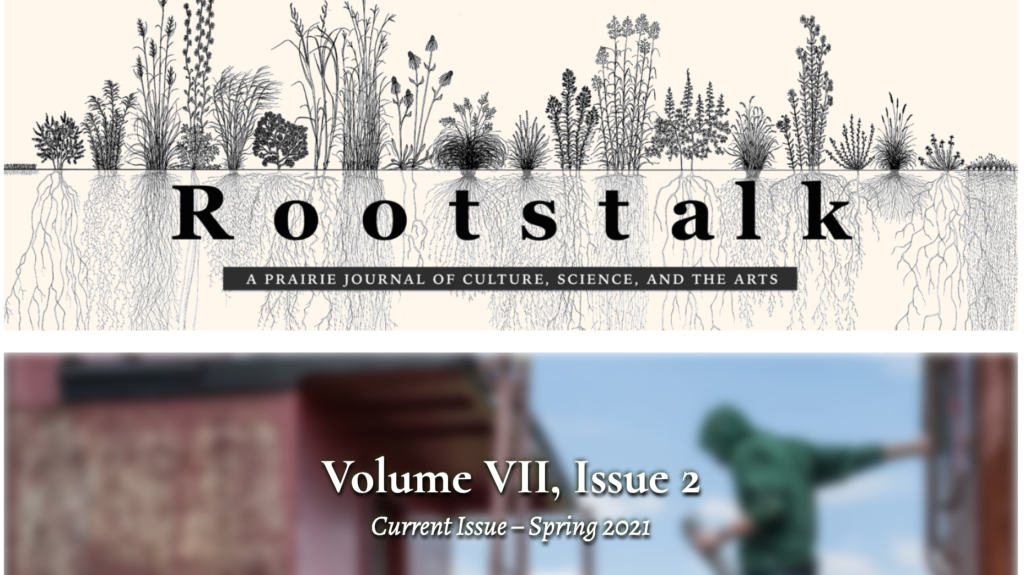
Project Leads: Jon Andelson (Professor of Anthropology), Mark Baechtel (Lecturer and Director of Forensic Activities & Club Sports), & Mark McFate (Digital Library Applications Developer) Vivero Fellow (2022-2023, 2023-2024): Mikey O’Connor Vivero Fellow (2021-2022): Senay Gokcebel ROOTSTALK began as an on-line publication project of the College’s Center for Prairie Studies, funded initially through a grant […]
Multicultural Alumni Crowdsourced Community Archive
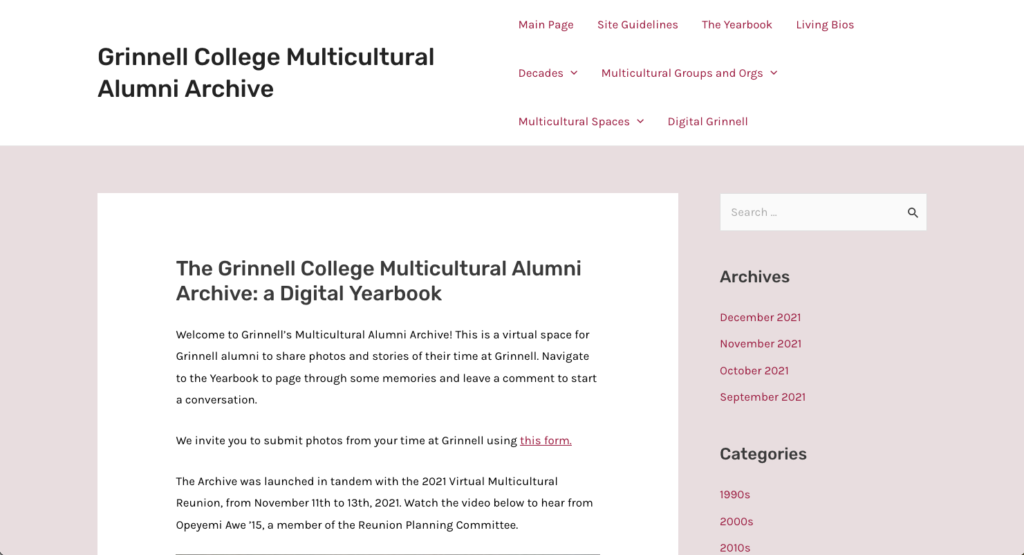
Project Leads: Sarah Smith-Benanti (Development and Alumni Relations) and Chris Jones (Library, Archivist of the College) Vivero Fellow (Fall 2021, 2022-2023): Claire Burns An idea hatched during Multicultural Reunion planning weekend and debuted at the 2019 Multicultural Reunion, the Multicultural Alumni Archive is a collaboration between students, alumni, staff, and faculty that established an Internet-based […]
Mapping Racial Trauma
Project Lead: Dr. Stephanie Jones (Associate Professor of Education) Vivero Fellow (2025-2026): Karolina Calleros Vivero Fellow (2021-2022, 2022-2023, 2023-2024): Feven Adane Getachew This project is connected to Professor Jones’ research on racial trauma in schools. The purpose of the Mapping Racial Trauma (MRT) in Schools project is to identify the ways in which Black students and […]
